



A City Written in Light
In a world where beauty often fades, Ravenna stands as a rare exception — a city that glows from within.
Nestled quietly between the Adriatic Sea and the rolling hills of Emilia-Romagna, this unassuming destination once held the power and prestige of an empire. It was here, not Rome, that emperors ruled, bishops built, and artisans turned glass and gold into eternal stories.
Today, Ravenna’s fame rests upon its Byzantine mosaics, eight UNESCO World Heritage monuments that preserve the spiritual and artistic brilliance of the early Christian world.
Among them, four masterpieces stand above the rest — each one a window into a different facet of history, faith, and art.
In this guide, we’ll take you through the Basilica di San Vitale, the Mausoleum of Galla Placidia, the Basilica di Sant’Apollinare Nuovo, and the Neonian Baptistery — the shining jewels of Ravenna’s crown.
Whether you visit on an Artviva private tour or simply dream from afar, these are the sacred spaces where light, faith, and imagination meet.
1. Basilica di San Vitale: The Golden Heart of Ravenna
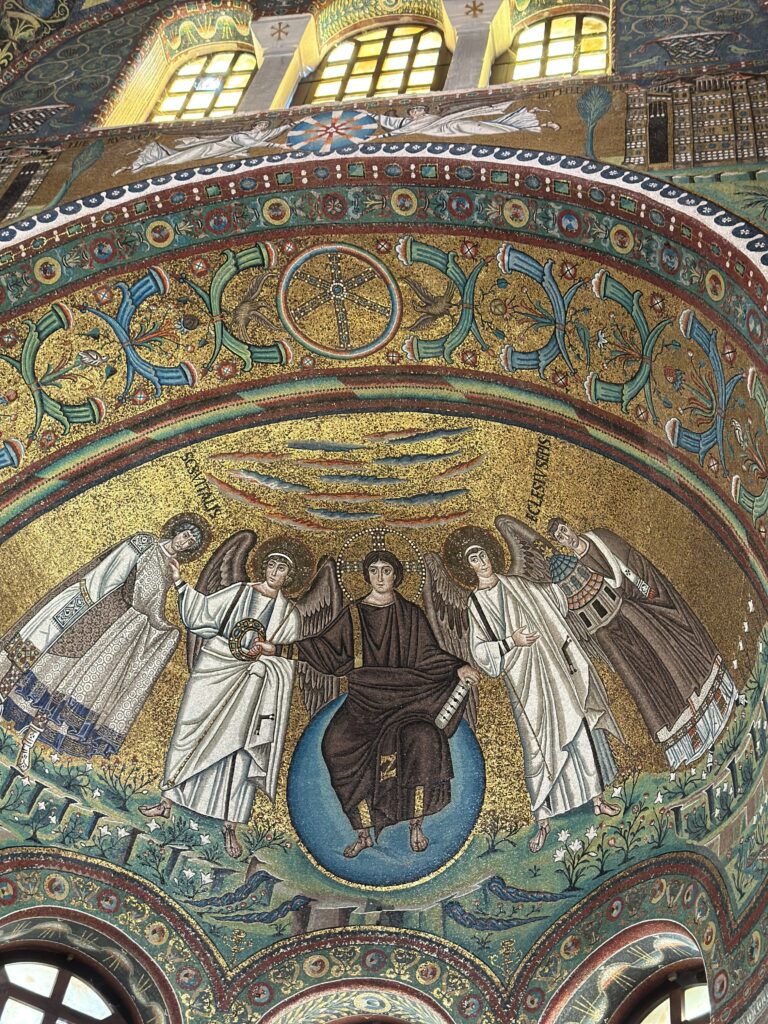


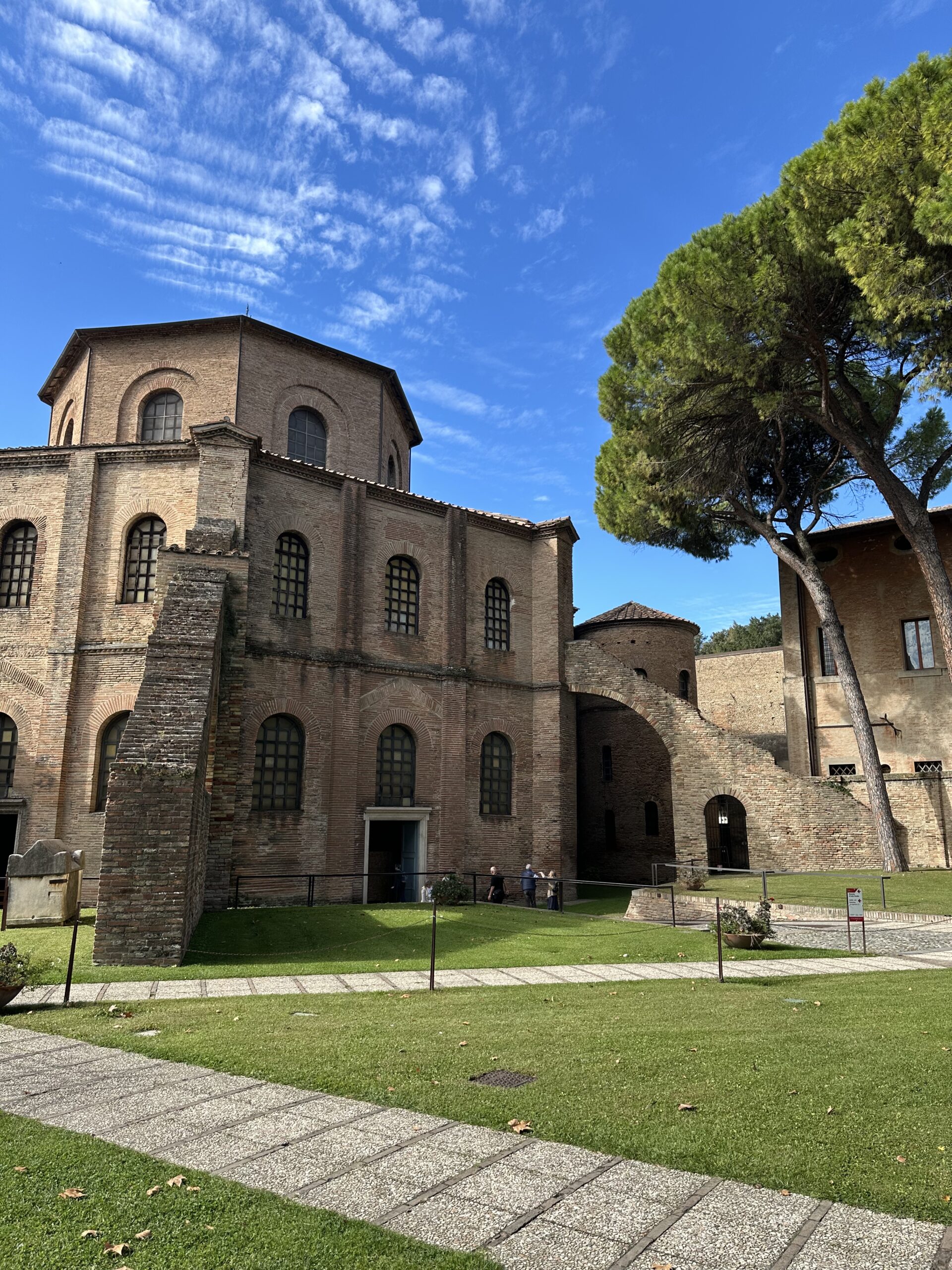
Standing tall and octagonal in the heart of Ravenna, the Basilica di San Vitale is not just a church — it’s an experience of transcendence.
Completed in 547 AD under the rule of Emperor Justinian, this basilica represents the peak of Byzantine artistic and architectural ambition in the West.
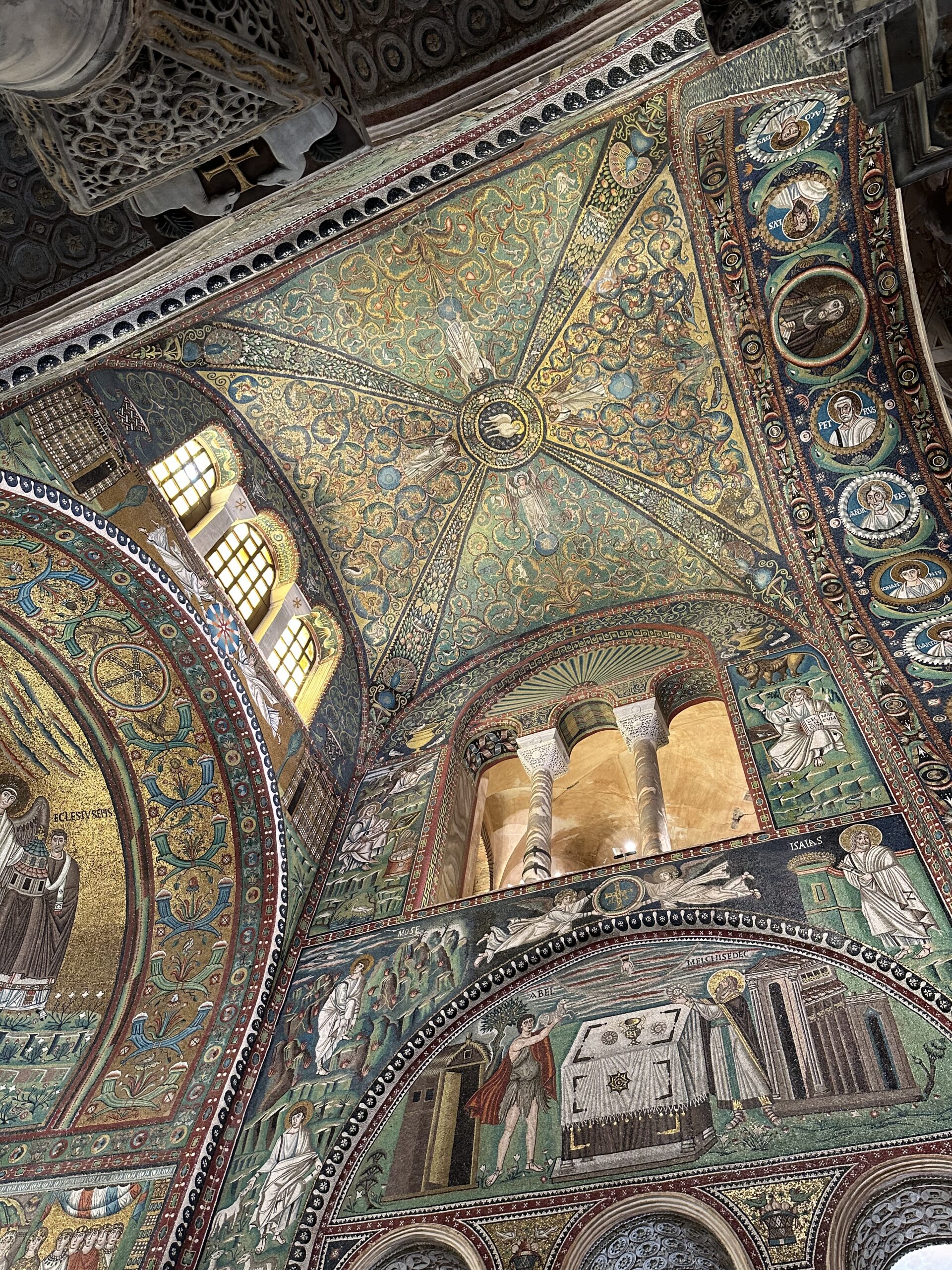
The moment you step inside, you are enveloped in gold, emerald, sapphire, and ruby — but not from gemstones. The walls and domes shimmer with tiny glass tesserae, each one placed by hand more than a millennium ago.
The light seems alive here, dancing across the walls like a reflection from heaven itself.
The Emperor and the Empress
The two most iconic mosaics in San Vitale depict Emperor Justinian and Empress Theodora, surrounded by their courts. These portraits are not mere decoration — they are political statements.
In a world divided between East and West, they proclaim the reach of Constantinople’s authority and the divine right of rulers chosen by God.
Justinian stands in regal purple, holding a golden bowl symbolizing his offering to Christ. His gaze is steady, timeless.
Opposite him, Theodora is radiant, adorned with pearls and jewels, stepping forward to present her chalice — her expression a blend of grace and strength.
They are the eternal couple of Byzantine art: two figures frozen in devotion and power, yet still startlingly human.
Architectural Brilliance
San Vitale’s architecture mirrors its spiritual vision. Its octagonal plan symbolizes eternity, while the layered galleries and domes create a sense of infinite ascent.
As you walk around, every step reveals new perspectives — arches open to alcoves, light filters through narrow windows, and golden halos catch your eye from unexpected angles.
No photograph can capture it. You simply have to stand there, feel the hush of history, and let the gold surround you.

2. Mausoleum of Galla Placidia: The Starry Jewel of Ravenna
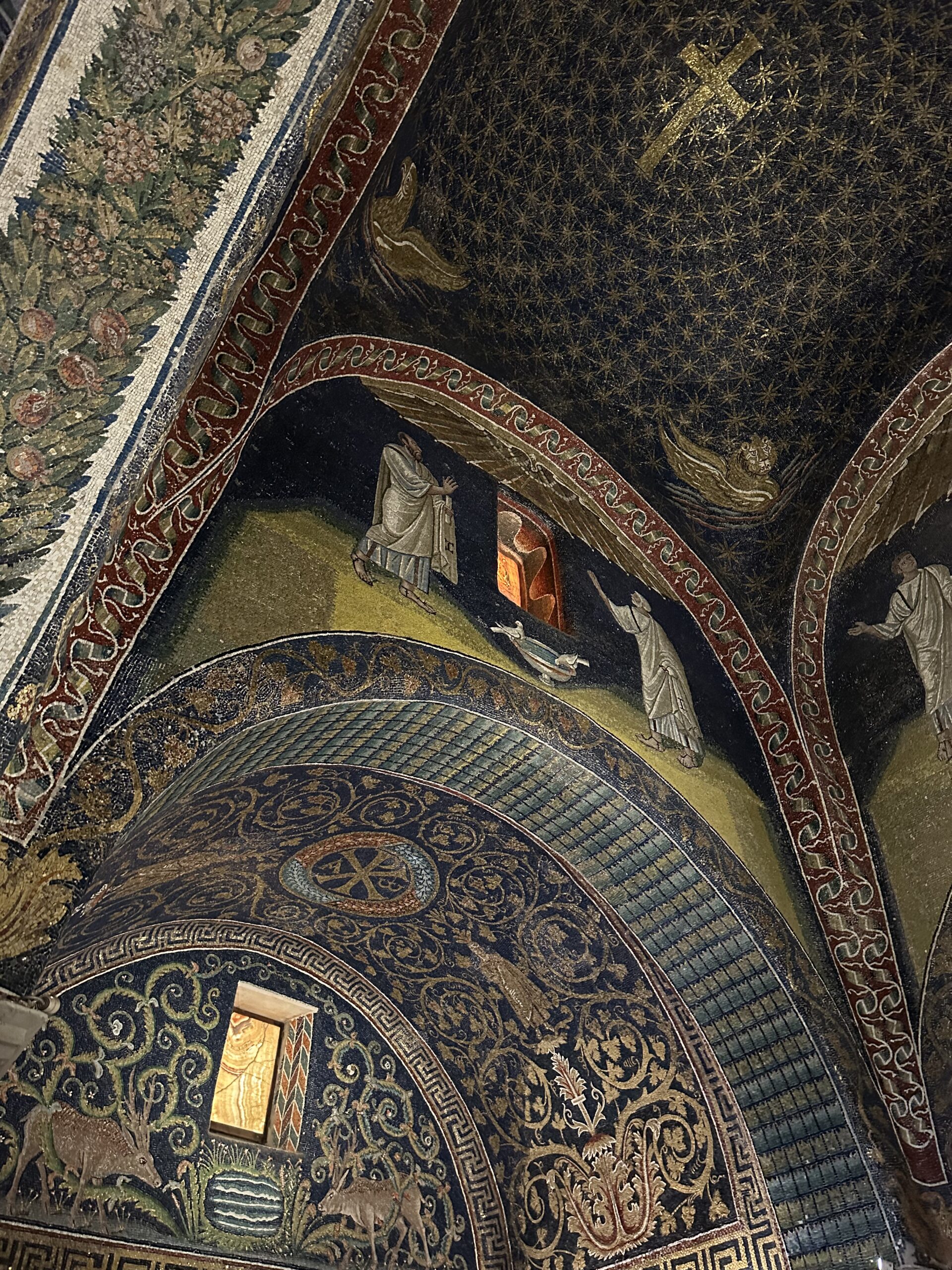
Tucked beside San Vitale is one of the smallest yet most moving monuments in the Christian world — the Mausoleum of Galla Placidia.
From the outside, it seems humble: a simple brick structure with a low, cross-shaped roof. But step inside, and the world changes.
The interior glows with deep blue mosaics that shimmer like a night sky scattered with golden stars. It feels intimate, spiritual, almost secret — as if you’ve entered the private chapel of heaven itself.
A Queen’s Legacy
The mausoleum is named after Galla Placidia, daughter of Emperor Theodosius I and sister to two Roman emperors.
She ruled as regent for her young son Valentinian III, one of the few women to wield real power during late antiquity.
Legend has it that she commissioned this small chapel as her final resting place, though she was later buried in Rome.
Symbolism in Every Tile
At the center of the dome, a golden cross radiates outward into a field of blue, representing eternal salvation and divine light. Around it, the four Evangelists — Matthew, Mark, Luke, and John — appear as symbolic creatures, their wings spread across the heavens.
Below, Christ appears as the Good Shepherd, a youthful figure clothed in imperial purple, surrounded by lambs. His staff is a cross, his gesture gentle yet commanding.
This image — tender, intimate, and profoundly human — was revolutionary for its time.
The space is so small that your breath seems to join the silence. Light flickers across the walls, and you realize that this is not just decoration — it’s devotion crystallized into glass.
3. Basilica di Sant’Apollinare Nuovo: The Gallery of Faith

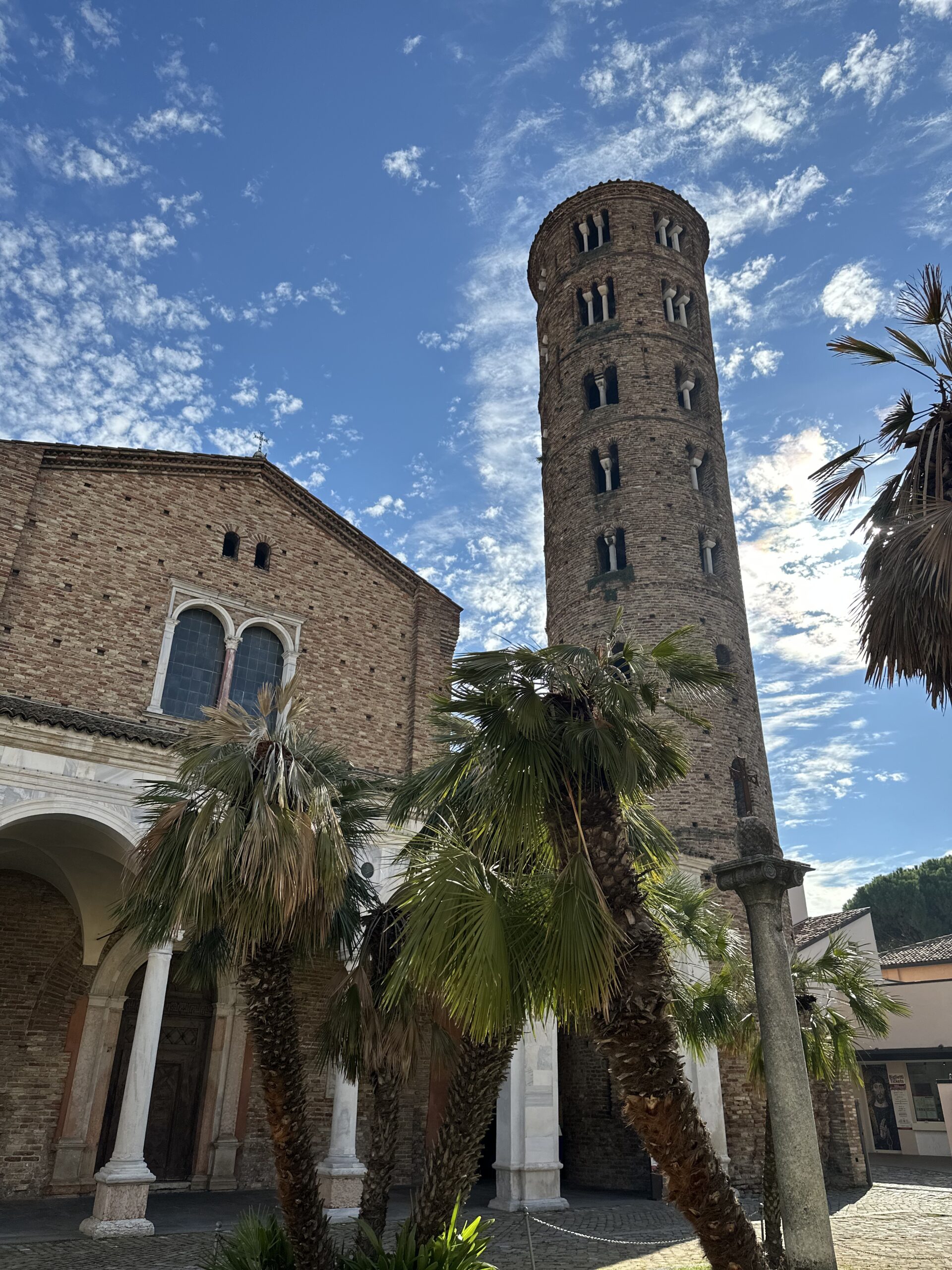
If San Vitale is imperial and Galla Placidia intimate, then the Basilica di Sant’Apollinare Nuovo is a triumph of narrative art — a mosaic storybook stretching across the walls of one of Ravenna’s most graceful basilicas.
Built by Theodoric the Great, the Ostrogothic king who ruled Italy in the early 6th century, this basilica originally served as his Arian palace chapel.
Later converted to Catholic use, it remains one of the most extensive surviving examples of early Christian iconography.
A Procession in Gold
The most striking mosaics line the upper walls of the nave:
On one side, a procession of 26 virgin martyrs moves toward the enthroned Madonna and Child; on the other, 26 male martyrs walk toward Christ. Each figure, though stylized, has unique features — individual faces that remind us of the humanity behind the faith.
The golden background glows like sunlight on water, while the figures seem to move rhythmically, their garments swaying with invisible motion.
This is art that breathes.
A Window into Transition
Sant’Apollinare Nuovo is also a fascinating blend of cultures and beliefs. Some mosaics still carry traces of Theodoric’s Arian faith, while others reflect the later Catholic doctrine.
The result is a visual dialogue between two theologies — a mosaic debate frozen in time.
Look closely, and you’ll even spot faint ghosts of erased figures where Theodoric’s palace attendants once stood, later covered when the church changed hands. History, here, is literally layered into the walls.

4. Neonian Baptistery: The Dawn of Christian Art
The Neonian Baptistery, also known as the Orthodox Baptistery, is the oldest of Ravenna’s monuments — built at the turn of the 5th century when Christianity was still defining its visual language.
Unlike the golden grandeur of San Vitale or the deep blues of Galla Placidia, this baptistery radiates with soft light, harmony, and peace.
A Dome of Faith
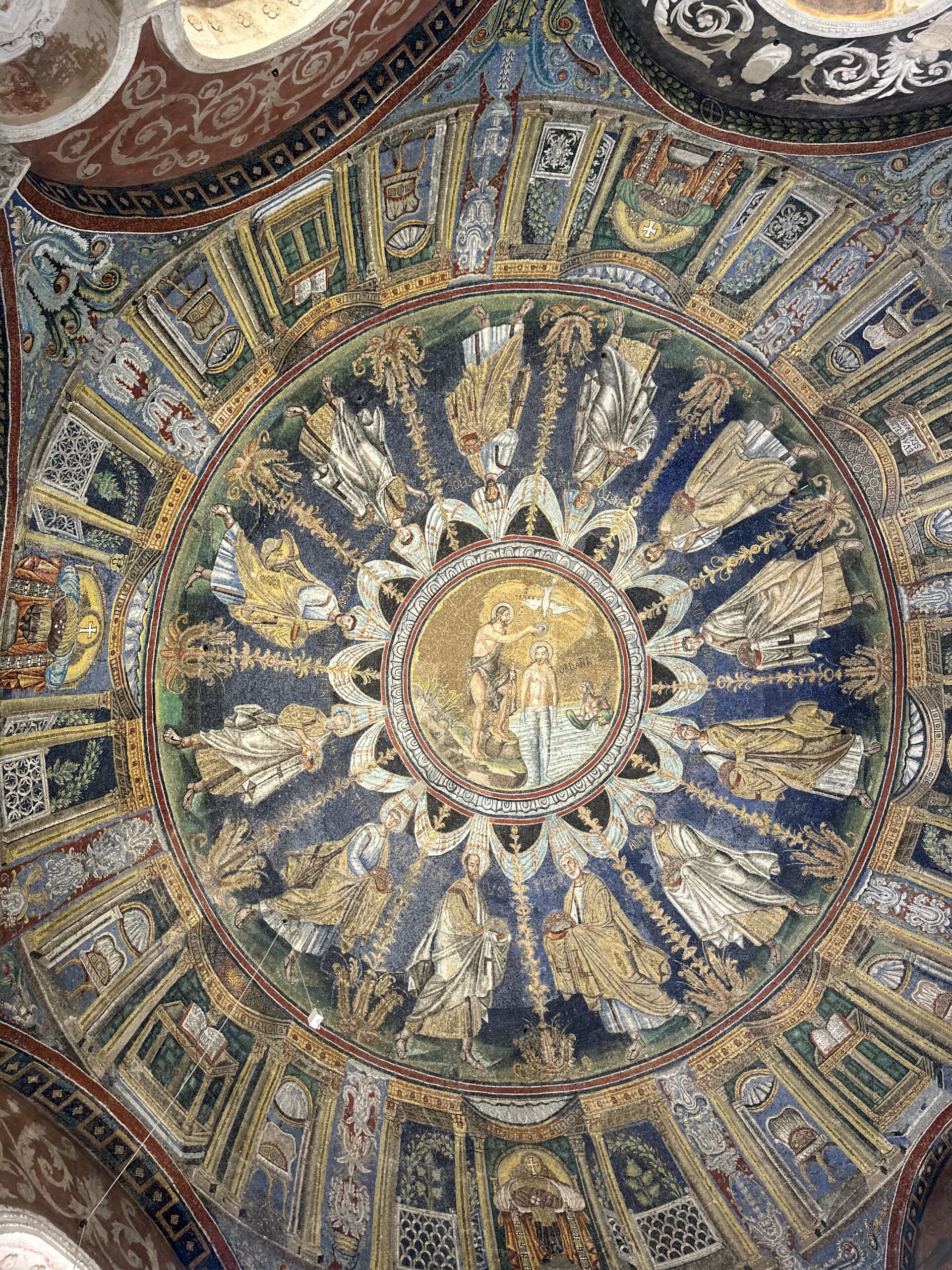
Look upward, and you’ll find one of the earliest surviving depictions of the Baptism of Christ.
At the center, a youthful, beardless Christ stands waist-deep in the River Jordan, while John the Baptist pours water over his head.
Above them, the Holy Spirit, depicted as a dove, descends in a stream of light. Around the scene, the twelve apostles move in a circular procession, each bearing a crown of victory.
It’s simple, direct, and profoundly symbolic. The circle represents eternity — no beginning, no end — while the scene itself reminds every believer of their own spiritual rebirth.
The Beauty of Early Simplicity
What makes the Neonian Baptistery remarkable is not opulence but balance. The colors — turquoise, ivory, green, and gold — are delicate, almost translucent. The architecture, octagonal like San Vitale, draws the eye upward, mirroring the rising motion of the soul through baptism.
This is where art met faith for the first time in Western history — where stone and glass learned to speak of salvation.
Experiencing the Mosaics with Artviva
Visiting Ravenna’s mosaics isn’t simply sightseeing — it’s time travel.
And with Artviva, you don’t just visit; you experience. Our expert art historians and local guides illuminate every detail, from the meaning of a single gold tessera to the politics behind a mosaic’s commission.
Artviva’s Private Ravenna Mosaic Tour includes:
Priority access to UNESCO monuments
Round-trip transfers from Florence, Bologna, or your villa
Tailored commentary for all ages and interests
Optional hands-on mosaic workshops with local artisans
Fine dining recommendations or curated restaurant bookings
Each tour is designed to match your rhythm — whether you’re an art enthusiast, a historian, or simply a traveler seeking beauty.
A Journey of Light and Legacy
Ravenna’s mosaics are not just relics of faith — they’re mirrors reflecting the essence of human creativity.
They remind us that beauty and meaning can endure across empires, religions, and centuries.
When you stand beneath the golden dome of San Vitale or the sapphire sky of Galla Placidia, you are standing in the presence of eternity — a connection between art, soul, and time itself.
This is the magic of Ravenna.
And through Artviva, it becomes more than a visit — it becomes your story.
Want to dive deeper into Ravenna’s and Emilia-Romagna treasures?
Private Mosaic Workshop and Iconic Mosaic Tour with Local Artisan in Ravenna
Explore Ravenna’s most famous mosaics with a guided 1-hour tour of the main mosaic site in the city center, followed by a hands-on Private Mosaic Workshop with a local artisan.
Private Full-Day Gourmet and Mosaics Tour in Ravenna
Join us on a Private Full-Day Ravenna Gourmet and Mosaics Tour and discover the city’s rich artistic and culinary heritage.
Faenza: An Italian Escape
Slip away to Faenza for a beautifully paced two-day private escape. Explore Italy’s capital of maiolica ceramics, unwind with vineyard tastings in the Emilia-Romagna hills, and savor farm-to-table cuisine with Artviva’s insider hosts.
Best of Bologna – Wine, History & Food Tour
Enjoy Bologna’s rich food culture on this guided walking tour. Taste the real pasta, pastries, local meats, cheeses and wines and enjoy the city’s architecture and history.
Parma Countryside Gourmet Adventure: Private Cheese, Ham, and Wine Tasting Tour
Immerse yourself in Parma’s culinary countryside on this Private Gourmet Adventure. Experience tastings of Italy’s renowned Parmigiano Reggiano, Prosciutto di Parma, Culatello di Zibello, and fine wines.
Private Modena Gourmet and Supercar Valley Tour
Experience the heart of Italy’s Supercar Valley on a Private Gourmet and Supercar Tour in Modena.
Read our others blogs about Ravenna:
Ravenna: Italy’s Mosaic City of Light and Legend
Beyond the Mosaics: The Best of Ravenna’s Culture, Food & Soul